From the dawn of humankind to a mere 400 years ago, all that we knew about our universe came through observations with the naked eye. Then Galileo turned his telescope toward the heavens in 1610. The world was in for an awakening.
From the dawn of humankind to a mere 400 years ago, all that we knew
about our universe came through observations with the naked eye. Then
Galileo turned his telescope toward the heavens in 1610. The world was
in for an awakening.
Saturn, we learned, had rings. Jupiter had moons. That nebulous patch
across the center of the sky called the Milky Way was not a cloud but a
collection of countless stars. Within but a few years, our notion of the
natural world would be forever changed. A scientific and societal
revolution quickly ensued.
In the centuries that followed, telescopes grew in size and complexity and,
of course, power. They were placed far from city lights and as far above the
haze of the atmosphere as possible. Edwin Hubble, for whom the Hubble Telescope
is named, used the largest telescope of his day in the 1920s at the Mt. Wilson
observatory near Pasadena, Calif., to discover
galaxies beyond our own.
Hubble's launch and deployment in April 1990 marked the most significant
advance in astronomy since Galileo's telescope.
Hubble space captures seven planets picture
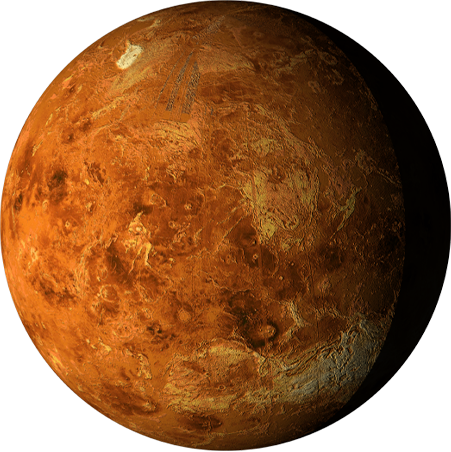
Venus is the second planet from the Sun. It is a rocky planet with the densest atmosphere of all the rocky bodies in the Solar System, and the only one with a mass and size that is close to that of its orbital neighbour Earth.
Gravity: 8.87 m/s² Radius: 6,051.8 km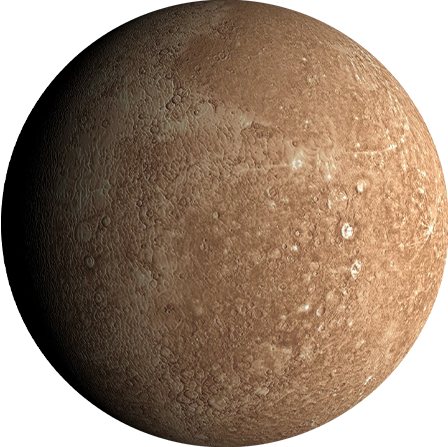
Mercury is the first planet from the Sun and the smallest planet in the Solar System. It is a terrestrial planet with a heavily cratered surface due to the planet having no geological activity and an extremely tenuous atmosphere.
Gravity: 3.7 m/s² Radius: 2,439.7 km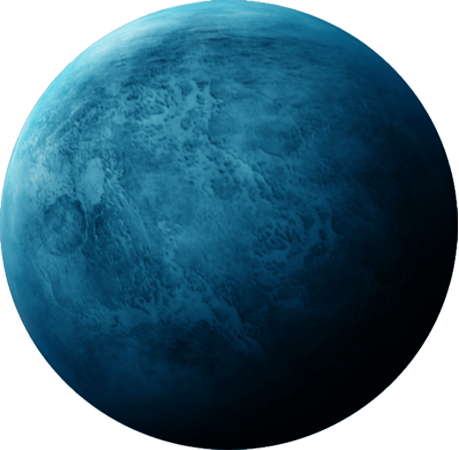
Neptune is the eighth planet from the Sun and the farthest known planet in the Solar System. It is the fourth-largest planet in the Solar System by diameter,the third-most-massive planet, and the densest giant planet.
Gravity: 4.9 m/s² Radius: 24,622 km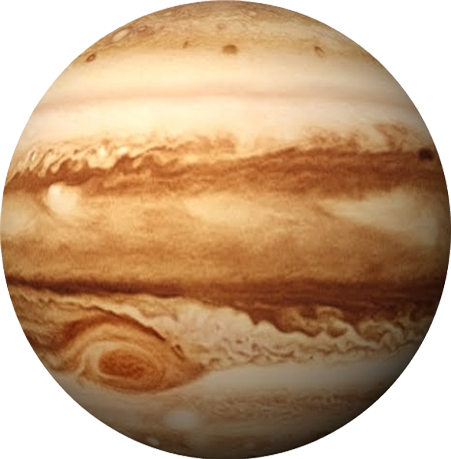
Saturn is the sixth planet from the Sun and the second-largest in the Solar System, after Jupiter. It is a gas giant with an average radius of about nine and a half times that of Earth,It has only one-eighth the average density of Earth.
Gravity: 10.44 m/s² Radius: 58,232 km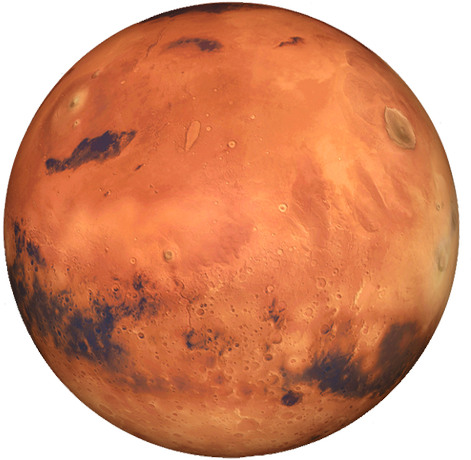
Mars is the fourth planet and the furthest terrestrial planet from the Sun. The reddish color of its surface is due to finely grained iron(III) oxide dust in the soil, giving it the nickname "the Red Planet".planets in the Solar System at 3,389.5 km.
Gravity: 3.71 m/s² Radius: 3,389.5 km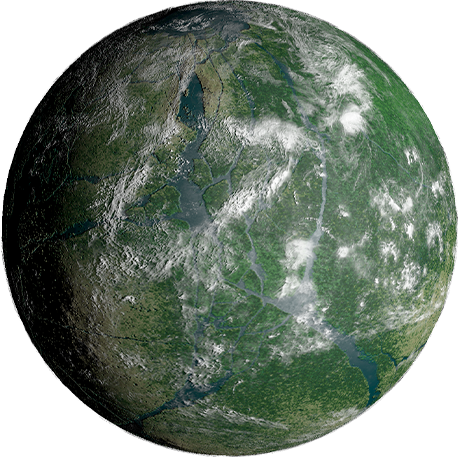
Earth is the third planet from the Sun and the only place known in the universe where life has originated and found habitability. This is enabled by Earth being a water world, the only one in the Solar System sustaining liquid surface water.
Gravity: 9.807 m/s² Radius: 6,371 km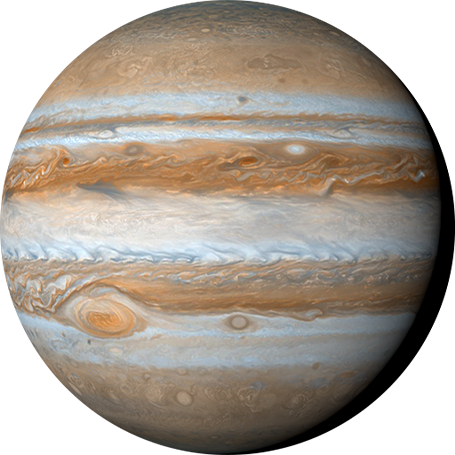
Jupiter is the fifth planet from the Sun and the largest in the Solar System. It is a gas giant with a mass more than two and a half times that of all the other planets in the Solar System ,slightly less than one-thousandth the mass of the Sun.
Gravity: 24.79 m/s² Radius: 69,911 kmA Dark Central Mass is Lurking at the Hub of a Glittering Stellar Island
Gravitational traps in space, black holes, come in different sizes. Or more correctly, different masses,
because they are all infinitely small. The first black hole ever discovered, in 1971, weighed in at 21
times our Sun's mass. It was formed by the explosion and collapse of a star. Examples of a completely
different class of black hole were identified in the 1960s-1970s. They weighed in at millions to
billions of times our Sun's mass. Like all supermassive black holes, those monsters dwell in the center
of major galaxies.
So, black holes can be super-big or super-small. The missing link is an intermediate-mass black hole,
weighing roughly 100 to 1,000 times our Sun's mass. A handful have been found in other galaxies.
Perhaps they are on the road to growing into supermassive black holes.